What is Freemasonry?
Freemasonry is a fraternal institution with the inherent purpose of seeking and examining Truth. As a Philosophical Brotherhood, its aim is to discover the True LIGHT of Truth through Wisdom and Knowledge. LIBERTY, EQUALITY, FRATERNITY: These are the three sacred maxims that illuminate the lofty aspirations of this great Institution. Upon these are founded the Masonic principles, and these are its radiant legacy
Becoming an
Apprentice of the Light
As with other institutions of this kind, in order to be admitted into it, the profane must be awakened and made to understand its laws and teachings, from which he cannot escape. Thus, anyone who desires to join this Brotherhood requires proper preparation and a definite period of time in order to ascend the steps and degrees of Masonry. His first step is that of the Entered Apprentice Mason. Here, the newly accepted Brother studies, observes, and trains. He learns the signs, tokens, emblems, and the benefits of the works practiced therein; he inquiries into their meaning, and within a short time strives to comprehend the fundamental principles of the Institution, together with the methods of propagation by which its teachings may attract the world of the profane.
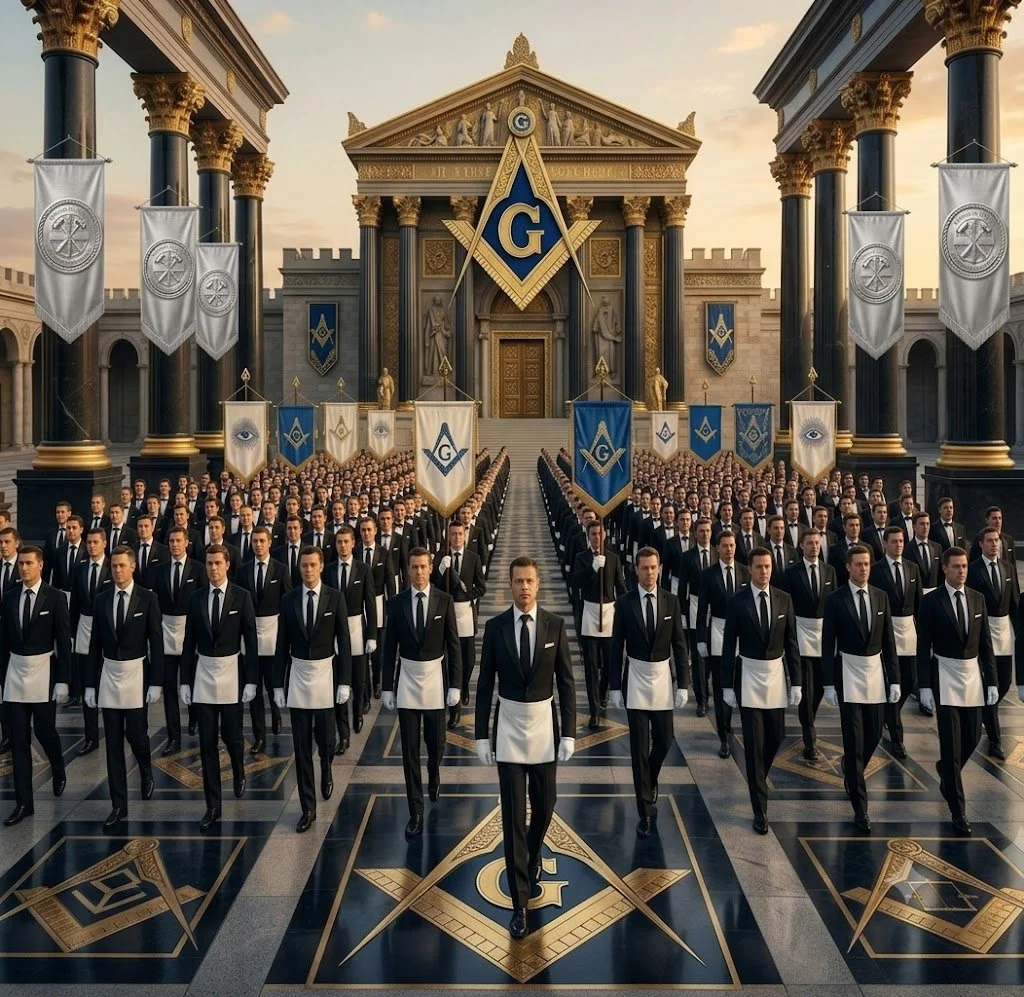
I. The Five-Tier Types of Masons by Level of Masonic Authority
Within the institutional framework, constitutional instruments, and foundational narratives upheld by the masonic bodies—associated with Continental Freemasonry, the Ancient and Accepted Scottish Rite (Charleston Rite of 1801), and allied European obediences—Masonic authority and legitimacy are viewed through direct Carta Patente, sovereign charters, and ancestral origins:
Prime Masonry:
Governing Body / Figures: Governed by Royal Masons, representing the earliest established Masonic authorities within their territorial and historical jurisdictions.
Role: Bestows the foundational Carta Patente, confirms alliance authority, and certifies lineage authenticity.
Premier Masonry:
Governing Body / Figures: Governed by Noble Masons.
Role: Operates under a direct Carta Patente and lineage originating from Prime Masonry, working the symbolic craft degrees in direct harmony with the Masonic Rite system.
Standard Masonry (Regular Masons):
Characteristics: Bodies possessing a valid charter, Carta Patente, or patent of constitution from an established Grand Lodge or Sovereign Grand Lodge adhering to traditional theistic and landmark standards.
Irregular Masonry:
Characteristics: Lodges or obediences whose lineage or current practices fall outside mainstream or traditional recognitions, or which have altered certain universal landmarks (such as adogmatic or Continental obediences operating outside mutual amity treaties).
Clandestine Masonry:
Characteristics: Bodies practicing Masonic rituals whose lineage is unconfirmed, disputed, or operating without an authorized charter recognized by an established parent body.